



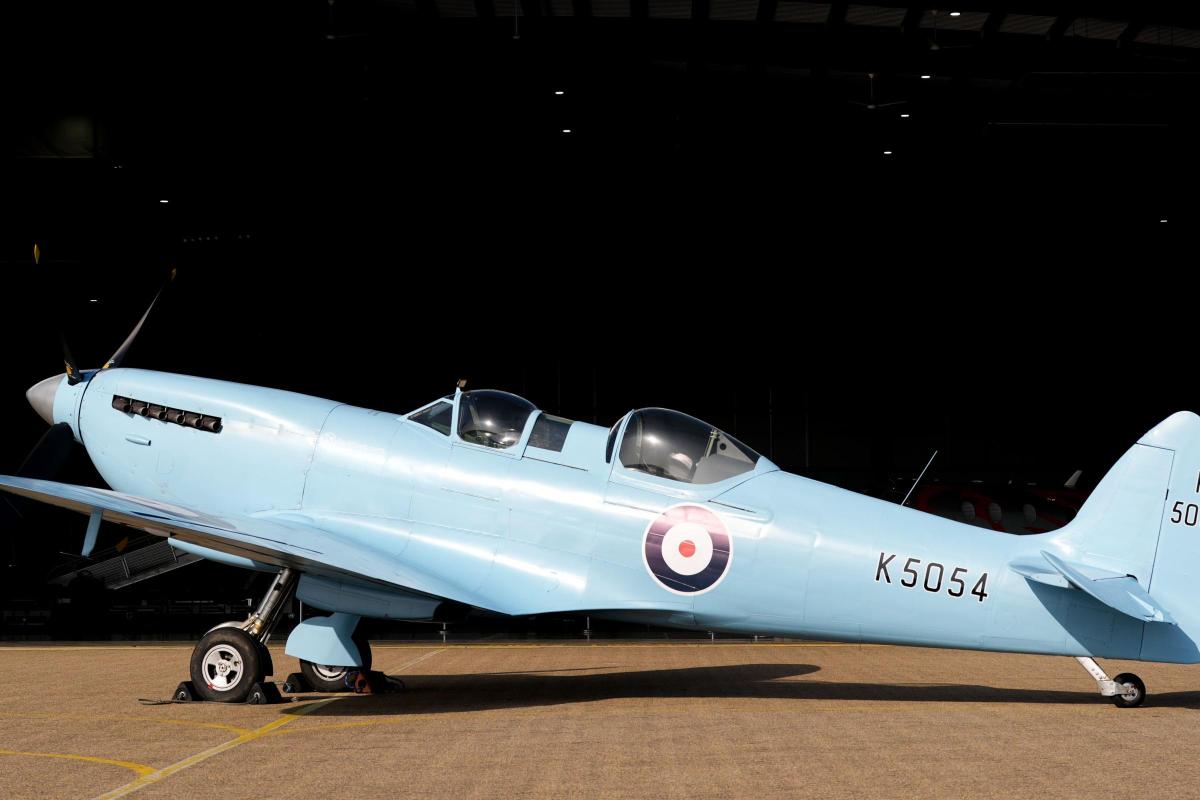


The Supermarine Spitfire is marking its 90th anniversary this year, with a series of nine flights set to take place across the UK to celebrate.
The iconic fighter plane came to symbolise Britain’s defiance in the Second World War, and Swindon can claim a proud place in its history.
The prototype Spitfire first flew from Eastleigh, near Southampton, on March 5, 1936, in the hands of test pilot Captain “Mutt” Summers.
Over the next decade, the Spitfire would become crucial to victory in the Battle of Britain and a familiar sight above Europe and beyond.
But as demand for the aircraft grew, large parts of the Spitfire story were built on the outskirts of Swindon.
With war looming in 1938, the government looked inland for “shadow factories” that could be dispersed away from vulnerable coastal sites.
South Marston was chosen as one of those sites thanks to its railway connections and, even more importantly, its skilled workforce at the Great Western Railway works.
Read more
Craftsmen who had spent their careers building carriages and wagons were retrained to work with aluminium fuselages, intricate wing structures and aircraft systems.
Initially, the South Marston plant helped produce Miles Masters, the fast trainers used to prepare pilots for frontline fighters.
As Spitfire orders grew, the site switched over to building later‑mark Spitfires and Seafires, the naval version designed for aircraft carriers.
Work was spread across the Swindon area: some sections were fabricated at Blunsdon and Sevenhampton, while parts of the Swindon Railway Works were turned over to producing components that would later be brought together at South Marston for final assembly.

By the late 1940s, South Marston had turned out dozens of Spitfire Mark 21s and Seafires, as well as undertaking vital repair and modification work that kept aircraft in service around the world.
The last of the Spitfire family rolled out of the factory in 1949, but aviation production at the site carried on for years afterwards.
Today, that site is now the current Pannattoni industrial warehouse development, but prior to that, it was perhaps better known as the location of the former Honda car manufacturer.
Yet the Spitfire era is still remembered locally, from the Supermarine‑linked sports club to memories of the full‑size Spitfire that once stood outside the works as a landmark.
In 1984, that plane was moved to RAF Stafford to become part of their collection.
Another Spitfire model was temporarily displayed at Regent Circus in the 1950s.
An artistic memorial to the Spitfire's local production was built by Dr Mike Pringle and placed at the Orbital Retail Park in 2018.


Share